
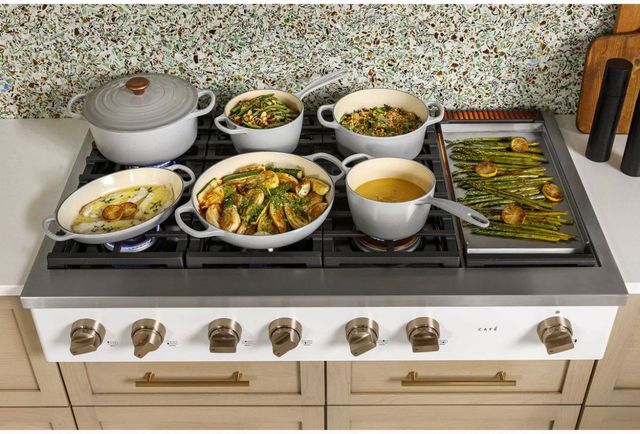
Luxury kitchens are evolving, and homeowners are increasingly seeking appliances that deliver restaurant-level performance in a residential setting.
One of the most popular upgrades in modern kitchen design is the rangetop cooktop, a powerful, built-in cooking surface designed to bring professional-grade heat and precision to everyday cooking. From large family meals to gourmet experimentation, this appliance provides the control serious cooks crave.
A rangetop cooktop typically features high-powered burners, front-mounted controls, and a built-in design that integrates seamlessly into custom cabinetry. These units often mimic the performance and visual appeal of a professional-style kitchen range while allowing greater flexibility in kitchen layouts. However, installing a rangetop requires careful planning, proper ventilation, and strict adherence to safety standards.
In this guide, we’ll walk through the key considerations for installing a rangetop cooktop, from understanding cabinet cutouts and ventilation requirements to handling gas and electrical connections safely. Whether you’re remodeling a kitchen or designing one from scratch, understanding installation basics will help ensure your new cooking centerpiece performs beautifully for years to come.
- ➜ Learn More: 6 Best 36 Inch Electric Cooktops
Rangetop vs Cooktop – Understanding the Difference
Before planning installation, it’s important to understand the rangetop vs cooktop difference. While both appliances provide a built-in cooking surface, rangetops are typically deeper, more powerful, and designed to resemble the top portion of a professional range.
A traditional cooktop usually sits flush within the countertop and has controls positioned on the surface. In contrast, a rangetop cooktop features front-mounted knobs located on a vertical control panel. This design improves accessibility and gives the appliance a commercial-inspired aesthetic.
Rangetops also extend further into the cabinetry below, often requiring additional cabinet depth or modification during installation. Because of this extra depth, they’re frequently paired with wall ovens installed beneath or nearby.
Here’s a quick comparison:
| Feature | Rangetop | Cooktop |
|---|---|---|
| Installation Depth | Deeper cabinet integration | Shallow countertop cutout |
| Controls | Front-mounted panel | Top-mounted |
| Power Output | Often higher BTU burners | Moderate to high |
| Ideal Kitchen | Custom or professional kitchens | Standard kitchen layouts |
What to Know Before Cutting Into Your Countertops
Proper preparation is essential before installing a rangetop cooktop. Unlike standard cooktops, rangetops require larger cabinet cutouts and deeper installation spaces to accommodate the control panel and gas components.
One of the first steps is reviewing the manufacturer’s specifications for slide in rangetop dimensions. These measurements dictate the precise width, depth, and clearance needed for installation. Even small measurement errors can affect how the appliance sits in the countertop or how the control panel aligns with cabinetry.
Cabinet cutout measurements must account for:
- Appliance width and depth: to ensure a proper structural fit.
- Countertop thickness: which affects the mounting height.
- Clearance around burners: for heat safety and protection of cabinets.
- Control panel overhang: ensuring it sits flush with the front drawers.
Homeowners also need to consider kitchen island rangetop installation if placing the appliance in an island configuration. Island installations often require special planning for ventilation routing and gas line placement beneath the floor, but the extra work is worth it when you end up with a stunning island to anchor your design.
Another major factor is rangetop ventilation. High-powered burners generate significant heat, smoke, and grease, making a powerful range hood essential. Ventilation systems should match the BTU output of the appliance to maintain safe and comfortable cooking conditions. Of course, you may have to adapt to a high BTU burner adjustment. With a little trial and error, you’ll love the precise temperature control modern burners can offer.
Always review the manufacturer’s installation manuals carefully. Each rangetop cooktop model may have unique spacing requirements or ventilation recommendations that affect countertop modifications.
Gas & Electrical Requirements
Installing a gas rangetop involves both fuel and electrical connections. While the appliance runs primarily on gas, most models require electricity for ignition systems, lighting, or electronic controls.
Safety is critical when handling gas connections. Proper gas line hookup safety begins with ensuring the line includes a shut-off valve within easy reach of the appliance. Pressure regulators may also be required depending on local gas supply conditions.
Professional installers typically perform the following steps:
- Verify gas supply compatibility: checking natural gas or liquid propane requirements.
- Install shut-off valves: to ensure immediate access in case of emergency.
- Test pressure levels: to guarantee consistent burner output.
- Check for leaks: after connection to ensure the system is secure.
Equally important are the electrical requirements for rangetop ignition systems. Most rangetops plug into a standard 120-volt outlet, but exact requirements can vary by manufacturer.
Local building codes may dictate additional safety measures, including specific ventilation standards or gas connection regulations. Because of these factors, many homeowners rely on licensed professionals to complete gas appliance installation safely and compliantly.
Step-by-Step Gas Rangetop Installation Guide
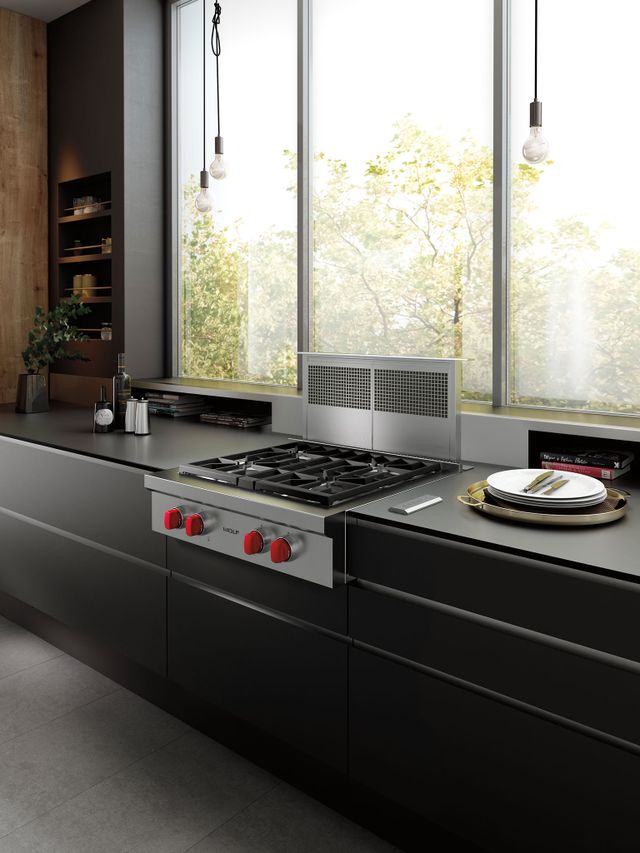
Installing a rangetop cooktop is a multi-step process that requires careful preparation and attention to safety.
1. Prepare the Countertop Cutout
The first step is creating a precise countertop opening based on the manufacturer’s specified slide-in rangetop dimensions. Accurate measurements ensure the appliance fits securely and aligns with cabinetry.
2. Position the Appliance
Once the cutout is complete, the rangetop can be lowered carefully into position. Installers typically verify that the appliance sits level before proceeding with connections.
3. Connect Gas and Power
Next comes the gas connection, following strict gas line hookup safety practices. Electrical power is also connected to support ignition systems and controls.
4. Secure and Seal the Edges
Properly sealing rangetop edges prevents spills from entering the cabinet cavity and helps maintain a clean, finished look around the installation area.
5. Test Burner Performance
Once installed, burners are tested to ensure proper flame behavior.
Throughout installation, safety remains the top priority. Following manufacturer instructions carefully ensures that your rangetop cooktop performs as intended and meets local safety codes.
Ventilation & Clearance Requirements
Because rangetops often feature powerful burners, adequate ventilation is essential for safe operation. Proper rangetop ventilation removes smoke, grease particles, and heat from the cooking area.
Range hoods should be sized according to total BTU output, with many professional rangetops requiring high-capacity ventilation systems. For gas cooktops, range hoods should typically be 24 to 30 inches above the rangetop. Clearances from cabinets and combustible surfaces are also critical.
| Clearance Type | Recommended Space |
|---|---|
| Side Clearance | 6–12 inches from cabinetry |
| Rear Clearance | Typically 2–3 inches |
| Overhead Clearance | 24–30 inches to range hood |
Backsplashes and overhead cabinets must also meet minimum spacing requirements to prevent heat damage. Because specifications vary between manufacturers, installation instructions provided with the rangetop cooktop should always take priority.
Upgrade Your Cooking with Premium Rangetops
If you’re ready to make the switch, here are five top models to consider.
Café 36” Stainless Steel Gas Rangetop
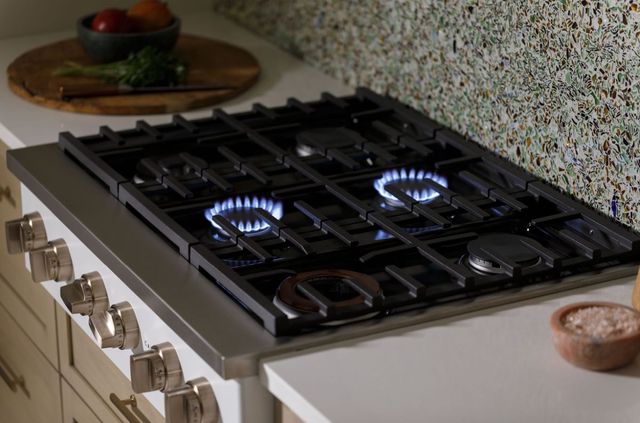
Shop Café 36” Stainless Steel Gas Rangetop
This Café 36-inch rangetop delivers versatile, high-performance cooking with a smart burner layout designed for flexibility.
Two 18,000 BTU power burners handle rapid boiling and searing, while multi-ring and Inspiral burners ensure even heat distribution across cookware. Dual 12,000 BTU burners support griddle cooking, making this a great choice for home chefs who want adaptability for everything from delicate sauces to high-heat meals.
Top Features
- 18,000 BTU Power Boil Burners: for intense searing heat.
- Inspiral Burner: for exceptionally even heat distribution.
- Multi-Ring Burner: with adjustable flame sizes for versatile cookware.
Wolf 36” Pro Natural Gas Style Natural Gas Rangetop
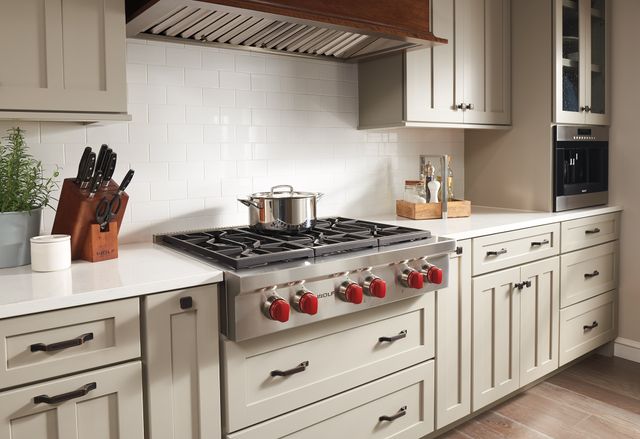
Shop Wolf 36” Pro Natural Gas Style Natural Gas Rangetop
This Wolf 36-inch rangetop is built for precision and power, featuring six dual-stacked burners that reach up to 20,000 BTUs for intense searing while offering ultra-low simmer control.
The sealed burner design ensures easy cleanup, and continuous grates allow smooth pan movement. Ideal for serious home chefs, this rangetop delivers professional-grade responsiveness and durability.
Top Features
- Dual-Stacked 20,000 BTU Burners: for maximum cooking flexibility.
- Continuous Cast-Iron Grates: for effortless pan transitions.
- Sealed Burner Design: optimized for quick and easy cleaning.
Wolf 48” Liquid Propane Stainless Steel Rangetop
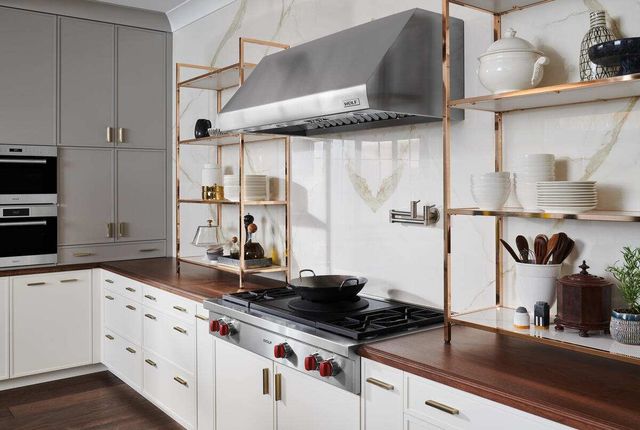
Shop Wolf 48” Stainless Steel Rangetop
Designed for culinary enthusiasts, this 48-inch Wolf rangetop features a powerful 35,000 BTU wok burner that excels at high-heat cooking while maintaining precise control down to 3,500 BTUs.
Dual-stacked burners provide additional versatility for simmering and searing, while continuous grates support effortless pan movement. It’s ideal for cooks who frequently prepare stir-fry or want maximum heat control across multiple cooking styles.
Top Features
- 35,000 BTU Wok Burner: industry-leading high-output performance.
- Dual-Stacked Burners: with an exceptionally wide heat range.
- Professional Grates: durable cast-iron construction.
Monogram Statement Collection 48” Stainless Steel Natural Gas Rangetop
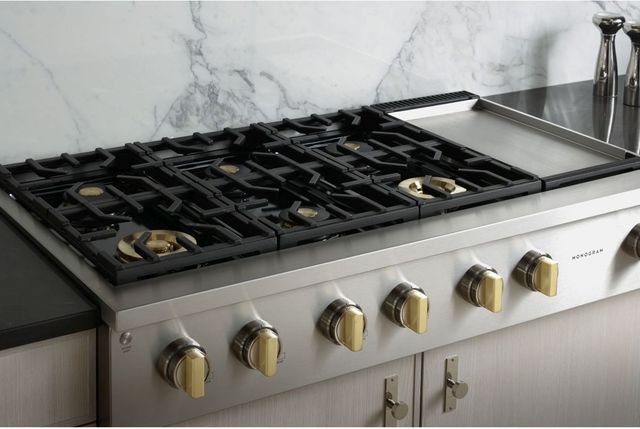
Shop Monogram 48” Natural Gas Rangetop
This Monogram 48-inch rangetop combines high performance with luxury design, featuring powerful burners and an 18,000 BTU integrated griddle for expanded cooking options.
Its seamless stainless steel surface enhances durability and easy cleaning, while illuminated knobs add both style and functionality. This model is perfect for design-focused homeowners who want professional performance paired with premium aesthetics.
Top Features
- 18,000 BTU Integrated Griddle: for premium indoor grilling.
- Ring-Lit Control Knobs: combining precision with high-end style.
- Seamless Construction: stainless steel designed for longevity.
Wolf 48” Liquid Propane Stainless Steel Rangetop with Griddle
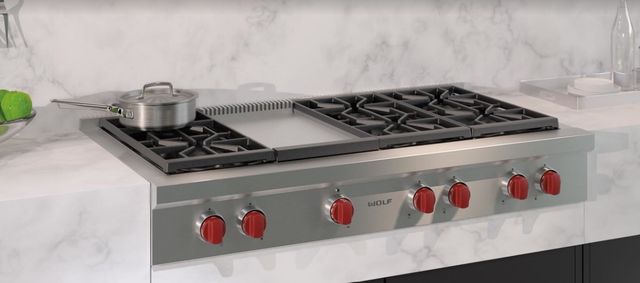
Shop Wolf 48” Liquid Propane Stainless Steel Rangetop
This Wolf 48-inch rangetop offers a balanced combination of power and versatility, with burners ranging from 9,200 to 20,000 BTUs to handle everything from gentle simmering to high-heat searing.
The 15,000 BTU infrared griddle delivers consistent heat for breakfast favorites and more. Designed for passionate home cooks, it provides precise control, durable construction, and a flexible burner configuration.
Top Features
- 15,000 BTU Infrared Griddle: for uniform, rapid heating.
- 20,000 BTU Burners: dual-stacked for precision simmer or sear.
- Flexible Configuration: 6 burners plus integrated griddle.
Maintenance & Long-Term Care
Proper maintenance helps ensure your rangetop cooktop continues performing reliably for years. Routine cleaning and periodic inspections can prevent buildup and maintain consistent burner performance.
Start by regularly cleaning burner grates and caps to remove grease or food residue. Most grates can be removed easily for washing, which helps maintain even flame distribution during cooking.
Periodic inspection of gas connections is also recommended as part of standard gas appliance maintenance. Checking fittings for leaks or wear ensures the appliance remains safe and efficient.
Homeowners should also periodically inspect the seal around the appliance. Over time, the materials used for sealing rangetop edges can degrade or loosen, allowing spills to seep into cabinetry.
Scheduling annual professional maintenance helps identify potential issues early and ensures all burners, igniters, and gas connections operate properly.
Bring Professional Precision to Your Kitchen Design
Installing a rangetop cooktop is one of the most impactful upgrades you can make in a modern kitchen. These appliances deliver powerful heat, professional styling, and exceptional cooking control that elevate everyday meal preparation.
From understanding the rangetop vs cooktop difference to planning ventilation, cabinet cutouts, and utility connections, proper installation ensures the appliance performs safely and efficiently. Paying close attention to slide in rangetop dimensions, ventilation needs, and clearance requirements can make a significant difference in long-term functionality.
If you're planning a kitchen upgrade, the experts at Slager Appliances can help you select the ideal rangetop and guide you through installation considerations. With the right appliance and proper setup, your kitchen can achieve the precision and performance of a professional culinary workspace.
- ➜ Learn More: Induction vs Electric Cooktops: How to Choose
Frequently Asked Questions about Rangetop Installation
In many cases, yes. Installing a gas appliance requires careful handling of fuel lines, pressure regulators, and shut-off valves. Following proper gas line hookup safety procedures helps prevent leaks and ensures compliance with building codes.
The main rangetop vs cooktop difference lies in design and installation depth. Rangetops feature front-mounted controls and extend deeper into cabinetry, while cooktops sit flush in the countertop with controls on the surface.
Most professional installations require 6–12 inches of side clearance from combustible cabinetry and approximately 30 inches between the cooking surface and overhead ventilation to prevent heat damage.
Yes, many kitchens pair a rangetop with a wall oven installed directly below. However, cabinet design must accommodate the deeper rangetop structure and ensure adequate airflow for heat management.
Most gas rangetops require a standard 120-volt outlet to power electronic ignition systems, lighting, and internal controls. Proper grounding and code-compliant wiring are essential for safety.
Why Trust Slager Appliances?
Founded over 70 years ago, Slager Appliances is a family-owned, independent appliance retailer based out of Iowa City, IA. Slager has competitive prices and industry knowledge in delivering and installing all major appliance brands. Large enough to offer competitive pricing yet small enough to continue offering the “white glove” service we pride ourselves on, our focus is always on the customer experience — from the first step into a showroom to the purchase transaction to well after your new appliance has been installed.
Whether you need to replace an old appliance, or if you’re remodeling and need an entire kitchen full of new brand-name products we are with you all the way. We will work with you to find a product that fits your needs, budget, and lifestyle.
Shop Rangetop Cooktops at Slager Appliances
Don’t put off until tomorrow what you can do today, and shop appliances online at Slager Appliances. Our friendly experts are always happy to help you find the best rangetop cooktop for your cooking needs— whether you call us at 319-337-3833, email us, or use our online chat feature. Better yet, stop by any of our Slager Appliances in Iowa City, IA. Visit us today!
```