
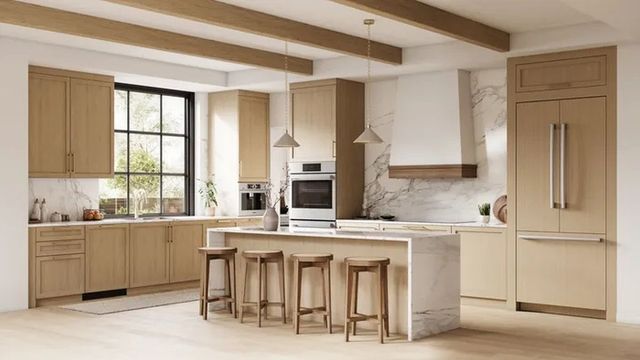
A kitchen remodel often stalls at the edges where appliances meet the cabinetry. You spend months designing custom woodwork, only to realize standard gaps ruin the flush finish. Fitting a panel ready refrigerator demands tighter tolerances than standard freestanding units.
Getting those exact margins right comes down to precise dimensions before the boxes even arrive. Slager Appliances helps you navigate exact cutout requirements and dedicated circuit placements so your layout matches the blueprints. This guide details sizing clearances, hardware compatibility, and leveling steps to lock your built in refrigerator safely in place.
Professional Built-In Refrigeration
Find dimensions, hinge types, and capacities that fit your exact cutout.
Key Takeaways
- Flush Fit: A Monogram French door unit requires a 46.38-inch depth clearance when the doors are fully open.
- Door Swing: A Thermador unit sits 83.56 inches tall and uses All-Leg Leveling hardware to stand straight.
- Custom Look: A Bosch unit holds 16.5 cubic feet of food and accepts matching cabinet faces.
How Do I Measure My Kitchen Cabinets to Fit a Panel Ready Refrigerator?
Tape measures determine whether your unit slides home or scrapes the cabinet walls. Evaluating the cutout height, width, and depth prevents binding doors. A standard built-in installation leaves a slight gap, but flush inset designs require tighter tolerances so the custom wood sits flat against adjacent doors. Extra breathing room at the back and top stops the sides from rubbing on the drywall. Plumb lines matter just as much as flat numbers.
A floor that slopes a quarter of an inch will throw off the entire alignment. You should lay a straight edge across the tile or hardwood to check for high spots before ordering any unit. Uneven floors make flush installations practically impossible without major shimming. Refrigerator door swing radius adds another layer to your sizing math. Thick custom panel faces change how the door hinges pivot. If your kitchen island sits too close, the bottom freezer drawers cannot open fully. Handles need adequate clearance to travel without dinging your other woodwork.
Taking precise inside dimensions of your cabinet box prevents costly returns. Measure the top, middle, and bottom widths separately, because wooden boxes are rarely perfectly square. The narrowest width measurement acts as your true clearance. Your depth measurement goes from the back wall to the front edge of the cabinet frame, not the door. Calculating these exact margins guarantees your panel ready refrigerator glides into the opening without catching on a stile. Baseboards must be factored in if the wall runs behind the installation space. You get a precise fit only by measuring three times.
Choosing Custom Cabinet Panels and Hardware for Your Refrigerator
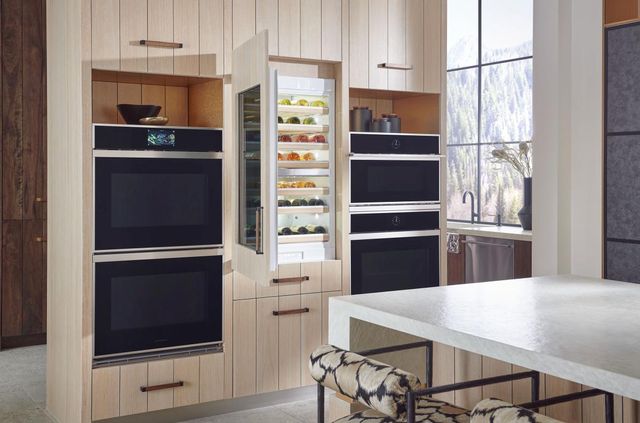
Three-quarter-inch wood remains the standard thickness for matching existing kitchen cabinetry. Working with a local cabinet maker makes sure the grain and paint colors match.
Panel Weight Limits
Heavy oak or walnut adds significant mass to the front of the unit. Refrigerator door hinges have strict weight capacities that cannot be exceeded. If the wood is too thick, the appliance will sag over time. You must verify the maximum load rating in the spec sheet before ordering the woodwork. Shaker-style frames present specific compatibility issues with refrigerator mounting hardware. The recessed center panels often lack the thickness required to anchor the screws safely. Installers must attach the brackets to the thicker outer stiles instead. Custom face panels require precise drilling to sit flush against the metal door. Factory-supplied templates guide the exact placement for every screw. A misaligned bracket leaves the custom panel hanging crooked across the front. Your installer adjusts the side-to-side alignment using set screws inside the door frame.
Hardware Selection
Large pulls designed specifically for thick refrigeration doors provide a better grip. A protruding brass handle needs to clear adjacent cabinets when you open the door. Long appliance pulls offer more leverage for heavy, loaded doors. Your cabinet maker will drill the mounting holes after dry-fitting the panels. Small knobs meant for standard cabinet doors do not offer enough grip to break the magnetic seal on a 36-inch wide unit. Coordinating the refrigerator pulls with your oven handles unifies the space. The final hardware installation happens only after the appliance is fully leveled inside the cutout.
Panel Ready Refrigerator Installation Requirements Compared
Review the specific clearances and capacities for these built-in units before finalizing your kitchen blueprints.
| Model | Total Capacity | Width | Depth (Without Panel) | Finish | Warranty |
|---|---|---|---|---|---|
| Bosch Benchmark Series (B30IB100SP) | 16.5 cu. ft. | 30" | 24" | Panel Ready | 2 Year Non-Electronic Parts/5 Year Electronic Parts/Limited Lifetime Stainless Steel Door |
| Thermador Freedom (T30IB100SP) | 16.6 cu. ft. | 30" | 24" | Panel Ready | 2 Years Parts & Labor |
| Sub-Zero Designer Series (DEC3050RID) | 17.5 cu. ft. | 30" | 24" | Panel Ready | 2 Year |
| Monogram (ZIP364NBVII) | 20.1 cu. ft. | 36" | 24.75" | Panel Ready | 2 Year Limited Parts & Labor |
What Are the Electrical Requirements for a Built In Panel Ready Refrigerator?
Plugging in a high-draw appliance requires planning the outlet location carefully. A dedicated 120-volt electrical circuit prevents blown fuses when the compressor kicks on. Most modern kitchens place the wall socket high up on the wall or tucked into an adjacent cabinet. Positioning the electrical connection properly avoids crushing the plug when you push the unit back. Vibration damage occurs if the metal frame rattles against the plastic outlet cover. Your water line connection provides the flow for the refrigerator ice makers. Copper tubing offers better durability than braided plastic lines behind closed cabinetry. The shutoff valve must remain accessible in case of an emergency leak. Airflow matters just as much as water and power for compressor longevity. Built-in models intake and exhaust air from the very front of the machine.
Keep these refrigerator ventilation requirements in mind during installation:
- Toe Kick Grilles: The bottom metal grate must stay completely unobstructed to draw in cool air.
- Top Compressors: Units with upper machinery need open space above the crown molding to release heat.
- Dust Buildup: Regular vacuuming of the front louvers keeps the internal condenser coils from overheating.
You will burn out the compressor prematurely if you block the ventilation paths. A panel ready refrigerator relies entirely on that front grate to breathe. Custom wooden toe kicks often restrict this essential airflow. Your carpenter must route adequate vents into the baseboard to match the factory specifications. Proper electrical and airflow planning keeps your food cold and your warranty intact. A hidden water valve and a dedicated circuit complete the proper rough-in phase. Running a new copper water line through the floor joists requires a professional plumber. The ice maker needs consistent water pressure to produce solid cubes without freezing up the inlet tube.
➜ Learn More: Top Benefits of Choosing a 4 Door Refrigerator
Leveling, Securing, and Attaching Panels During Installation
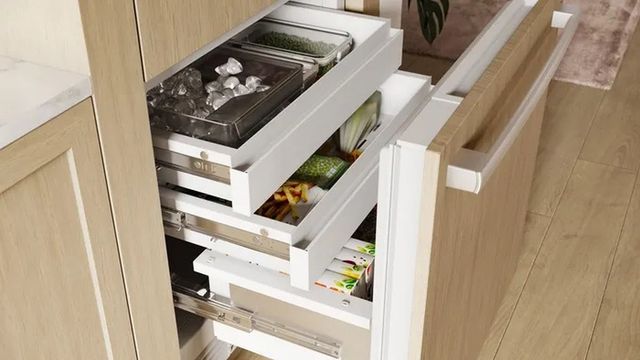
Kitchen corners trap dirt and make maneuvering a heavy appliance difficult. Rolling the refrigerator into the cutout takes patience and thick floor protection. Cardboard or specialized plastic sheets prevent the metal wheels from gouging your hardwood floors. Once the machine sits inside the opening, adjusting the appliance leveling legs becomes the next priority. A heavy 36-inch unit will not seal correctly if the frame leans forward.
Consider a typical flush inset installation with heavy custom doors. You raise the front leveling legs to tilt the machine back slightly. This slight backwards angle helps the heavy doors close automatically. If the bubble on your spirit level sits off-center, the internal ice maker will spill water into the freezer bin.
The dry-fitting process for custom panels happens before you drive any permanent screws. Installers hang the wooden face on the factory brackets to check the gaps around the perimeter. A hand level verifies the horizontal alignment across the top gap. Small adjustments at the hinges fix any crooked lines before final tightening. Driving the screws through the metal door into the wood requires precise depth control. You will punch through the finished front if you use a screw that is too long. Securing the appliance to the adjacent cabinets with anti-tip brackets finishes the physical installation process. These metal clips prevent the entire machine from tipping forward when you load the upper shelves. Your installer hides the final hardware behind the rubber door gaskets for a clean look. Taking the time to square the metal frame prevents squeaking hinges. The leveling process determines how smoothly your drawers glide on their tracks.
Panel Ready Refrigerator Pros and Cons
Integrated refrigeration blends massive appliances into your background woodwork for a cleaner look. You must weigh this custom aesthetic against the higher initial costs and stricter installation demands.
Pros
Custom Match
Wooden faces let the appliance vanish entirely into your existing cabinet run.
Hardware Freedom
Appliance pulls and handles can exactly match your nearby oven and sink fixtures.
Flush Finish
Inset models sit flat with the surrounding frames for a tailored layout.
Cons
Installation Cost
Attaching the wood panels requires specialized carpentry skills and extra labor hours.
Strict Tolerances
A fraction of an inch off plumb will cause the thick wooden doors to bind.
How We Chose the Best Built-In Refrigerators
An adjustable hinge system mattered more than a long list of smart features. Exact cutout tolerances determined which units made the final list. Interior capacity and organized storage bins kept these specific models at the top. We ruled out units that lacked a flush inset option. Slager Appliances stocks every built-in refrigerator listed in this guide.
Top Panel Ready Refrigerator Models for Your Kitchen
Our showroom features configurations designed to sit flush with your custom woodwork. These four models deliver reliable cooling while supporting the weight of solid wooden panels.
Bosch Benchmark Series 30" 16.5 Cu. Ft. Panel Ready Built-In Bottom Freezer Refrigerator
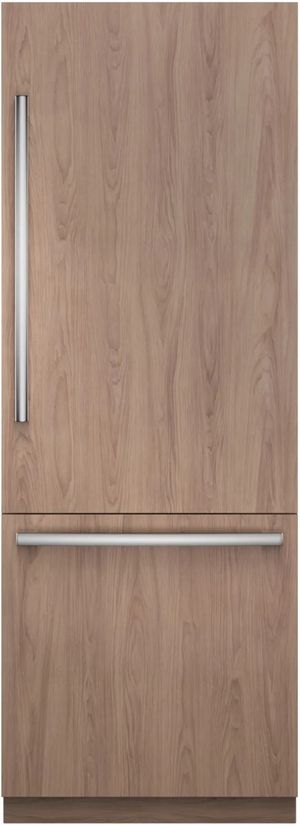
Shop Bosch Panel Ready Refrigerators
Best for: narrow kitchens requiring a reversible hinge and smart connectivity.
This counter depth unit delivers 16.5 cubic feet of total storage space behind your custom woodwork. VitaFresh pro drawers maintain precise humidity levels to keep your produce crisp for days. A full-color touch control panel sits at an ergonomic height for quick daily temperature adjustments. The internal water dispenser features a filtration replacement indicator light so your ice stays fresh. You can configure the reversible hinge to swing left or right depending on your room layout. The pull-out freezer drawer holds 5.6 cubic feet of frozen goods securely inside the lower basket.
Top Features
- Internal Dispenser: A hidden water spigot keeps the exterior wooden face completely smooth.
- Wi-Fi Capable: Smart app compatibility lets you monitor the door alarm remotely.
- ENERGY STAR: This efficient system uses automatic defrost to save electricity.
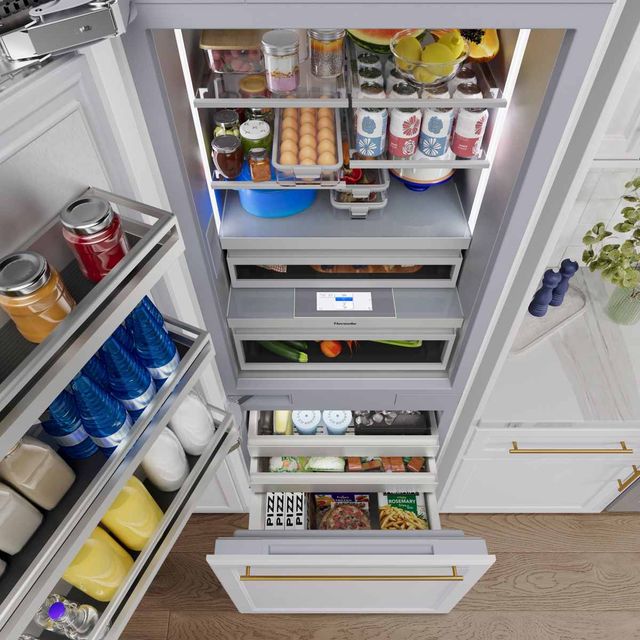
Thermador Freedom 30" 16.6 Cu. Ft. Panel Ready Built-In Bottom Freezer Refrigerator
Shop Thermador Panel Ready Refrigerators
Best for: households wanting gentle door closures and flexible interior shelving.
Advanced All-Leg Leveling hardware simplifies the balancing process during a tight kitchen installation. A bottom freezer configuration provides 16.6 cubic feet of capacity within a sleek 30-inch frame. Split-level shelves adapt quickly to hold tall juice pitchers or wide deli trays. The SoftClose mechanism catches the heavy wooden panels and pulls them shut gently without slamming. An internal dispenser pushes filtered water through an UltraClarityPro filter to remove impurities safely. The SuperFreeze function rapidly cools down warm groceries after a large supermarket trip. LED lighting brightly illuminates both the fresh food zone and the lower 5.6 cubic foot freezer compartment. A reversible hinge design accommodates any challenging floor plan easily.
Top Features
- SoftClose Drawers: Custom hinges pull the heavy bins shut smoothly.
- UltraClarityPro Filter: The internal system removes 99 percent of water impurities.
- Wi-Fi Capable: Home Connect functionality sends helpful door alarm notifications.
Sub-Zero Designer Series 30" 17.5 Cu. Ft. Panel Ready Built-In Column Refrigerator

Shop Sub-Zero Panel Ready Refrigerators
Best for: dedicated refrigeration zones requiring huge capacity and maximum food preservation.
17.5 cubic feet of dedicated refrigerator space sits behind a single right-hinge custom door. The Split Climate intelligent cooling system keeps your fresh produce crisp for much longer periods. ClearSight LED lighting reduces dark shadows across the stainless steel interior accents. You control the internal humidity settings simply by tapping the accessible touch screen panel. An internal ice and water dispenser provides cold drinks without breaking the exterior lines. Smart app compatibility gives you remote monitoring capabilities at all times.
Top Features
- Column Design: A huge 17.5 cubic foot fresh food compartment offers vast storage.
- Split Climate: Intelligent cooling preserves your food items for extended durations.
- Touch Controls: A conveniently accessible panel lets you adjust lighting instantly.
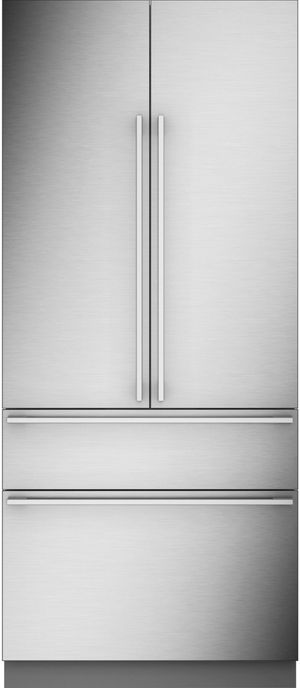
Monogram 36" 20.1 Cu. Ft. Panel Ready Built-In French Door Refrigerator
Shop Monogram Panel Ready Refrigerators
Best for: large families needing four doors and multiple temperature zones.
Four independent doors open into 20.1 cubic feet of well-organized interior space. The 36-inch width allows for wider serving platters inside the 13.7 cubic foot upper fresh zone. Two humidity-controlled vegetable drawers protect delicate greens from wilting prematurely. A versatile six-temperature setting convertible drawer adapts for wine, cheese, or frozen treats. The factory installed single ice maker means you never run out of cubes during a dinner party. You can connect this unit to your home network using the built-in Wi-Fi capability. Statement and Minimalist collection handles provide two distinct hardware choices for the thick custom wooden panels.
Top Features
- Flush Inset Installation: The sleek cabinet design sits entirely flat with adjacent doors.
- Convertible Drawer: Six separate temperature settings cool different food types accurately.
- Sabbath Mode: The internal computer disables interior lights for holiday observances.
Plan Your Panel Ready Refrigerator Upgrade with Slager Appliances
A finished kitchen feels complete only when the appliances sit flush against the surrounding woodwork. Proper cutout measurements and dedicated ventilation keep your integrated machine running quietly for years.
Slager Appliances provides the expert showroom guidance you need to finalize your complex cabinet blueprints. Our team offers professional installation and dedicated local customer service that big-box stores simply cannot match. Stop by our showroom today to lock in your exact cutout dimensions.
➜ Learn More: Sub-Zero Cabinet Depth Fridge Installation: Clearance, Venting, and Fit Tips
Frequently Asked Questions about Panel Ready Refrigerators
You need exact measurements matching the manufacturer cutout specifications to install a panel ready refrigerator. A Monogram 36-inch unit requires a depth clearance of 46.38 inches when the double doors are fully open.
A built in panel ready refrigerator requires a dedicated 120-volt electrical circuit to operate safely. The wall outlet sits in an adjacent cabinet or high on the wall to prevent the metal frame from crushing the plug.
Paying for professional installation for a panel ready refrigerator prevents crooked gaps and binding hinges. Professional installers use heavy-duty anti-tip brackets and exact leveling techniques to balance weights up to 400 pounds.
A regular counter depth unit slides straight into the opening, while a panel ready refrigerator demands precise dry-fitting and custom cabinet mounting. Standard units leave visible gaps around the sides, whereas integrated models sit flush within tight dimensional tolerances.
You cannot use standard cabinet handles on your custom refrigerator panels because the magnetic door seals require much more pulling force to open. An appliance pull measures longer and uses thicker mounting screws to handle the weight of a loaded 30-inch door.
A new built-in refrigerator needs to sit upright for at least four hours before you connect the power cord. This resting period allows the internal compressor oil to settle back into place after the delivery truck transports the unit.
Why Trust Slager Appliances?
Founded over 70 years ago, Slager Appliances is a family-owned, independent appliance retailer based out of Iowa City, IA. Slager has competitive prices and industry knowledge in delivering and installing all major appliance brands. Large enough to offer competitive pricing yet small enough to continue offering the “white glove” service we pride ourselves on, our focus is always on the customer experience — from the first step into a showroom to the purchase transaction to well after your new appliance has been installed.
Whether you need to replace an old appliance, or if you’re remodeling and need an entire kitchen full of new brand-name products we are with you all the way. We will work with you to find a product that fits your needs, budget, and lifestyle.
Shop Panel Ready Refrigerators at Slager Appliances
Don’t put off until tomorrow what you can do today, and shop appliances online at Slager Appliances. Our friendly experts are always happy to help you find the best panel ready refrigerator for your needs— whether you call us at 319-337-3833, email us, or use our online chat feature. Better yet, stop by any of our Slager Appliances in Iowa City, IA. Visit us today!
➜ Learn More: Best Thermador Fridge Options for Luxury Kitchens